HUBSPOT

Summary
CRM Bônus implemented Cloud Humans’ AI (nicknamed Val) in the Vale Bônus service and went from 30% retention with the traditional bot to 85% retention with AI, with responses in 16 seconds and an improvement of 10 percentage points in the AI's CSAT (reaching 74%). The evolution came in phases: knowledge base, continuous auditing, tone of voice personalization, and API integrations with internal systems.
Context: what CRM Bônus handles (and why it becomes complex quickly)
The CRM Bonus operates three service avenues: Giftback, Bonus Vale, and CRM&Ads. In the Bonus Vale, the user receives credits (e.g., for loyalty/timely payment) and can exchange them for offers and discounts, often dealing with rules, deadlines, and amounts.
This has two practical implications:
It’s “almost financial”: it deals with expectations and perceived money.
Changes are frequent: offers, rules, and campaigns change all the time.
If you have taken care of CX in this type of product, you know: the customer's measuring stick is relentless.
Before AI: when “outsourcing” and “traditional bots” fail at the same time
The CRM Bonus has reached a point where the classic options were not closing:
Alternative | Why it seems good | Why it breaks quickly |
Outsourcing customer service | increases capacity quickly | training takes time, turnover hurts, quality fluctuates |
Traditional FAQ bot | cheap, simple | low retention, doesn't understand frustration, doesn't transfer well |
In their case, the previous bot retained about 30% (there was mention of 15% as a market reference for simple bots, which aligns with what we see in various operations). The consequence was twofold: frustrated customer and overloaded team.
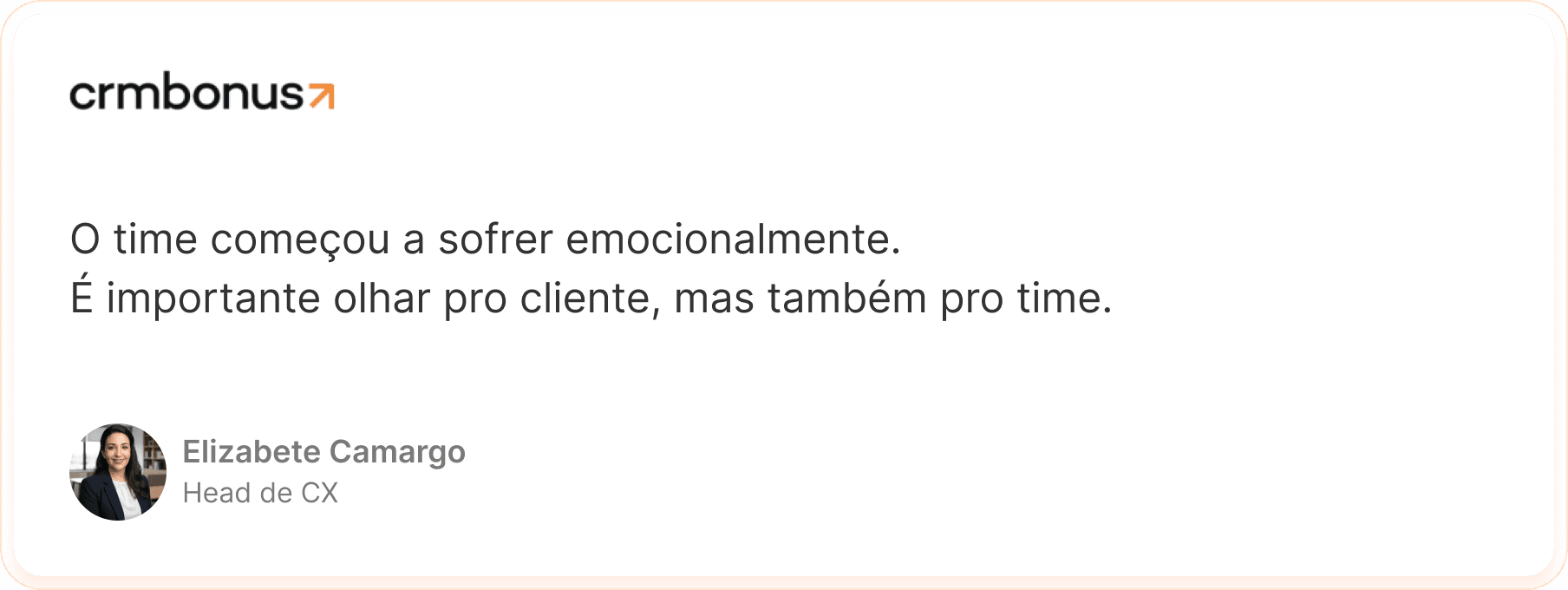
This point is more serious than it seems. Burnout in CX is operational churn. You lose good people and it takes months to return to the previous level.
What changed with Cloud Humans: AI as a living operation (not as a project)
Here goes the part I strongly defend: Good AI in CX isn't born ready. It is trained in production.
CRM Bônus did this right because they treated it as routine:
1) Start small and map frictions (real Pareto)
They had already mapped where the bot failed. So the AI first tackled the issues that hurt the most (the real 80/20).
2) Minimum viable content, with curation
They reviewed FAQs, created new materials, and organized the knowledge base. It didn't need to be a "perfect center." It needed to be useful.
3) Continuous auditing with a clear owner
One detail that almost everyone ignores: having someone from CX responsible for the audit speeds things up tremendously. It's not an IT project. It's the customer experience.
4) Personality and tone of voice
They gave a name, persona, and language. The AI became Val. And yes, there are clients who think it is human — and this even appeared in public feedback.
5) Integration via API to move beyond "FAQ"
Phase 2 was crucial: creating query APIs for status, internal CRM data, and information that a human would consult.
This is the difference between "chatbot" and "agent."
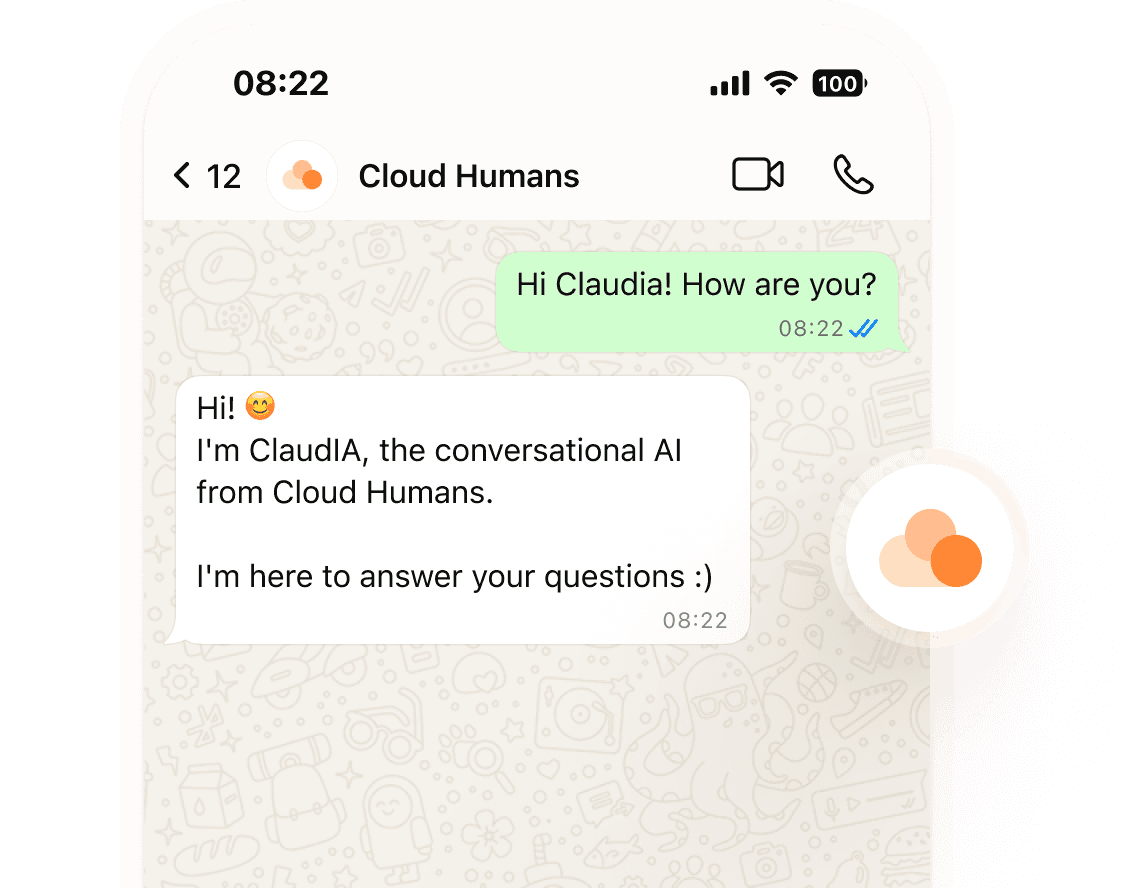
Example of a real conversation
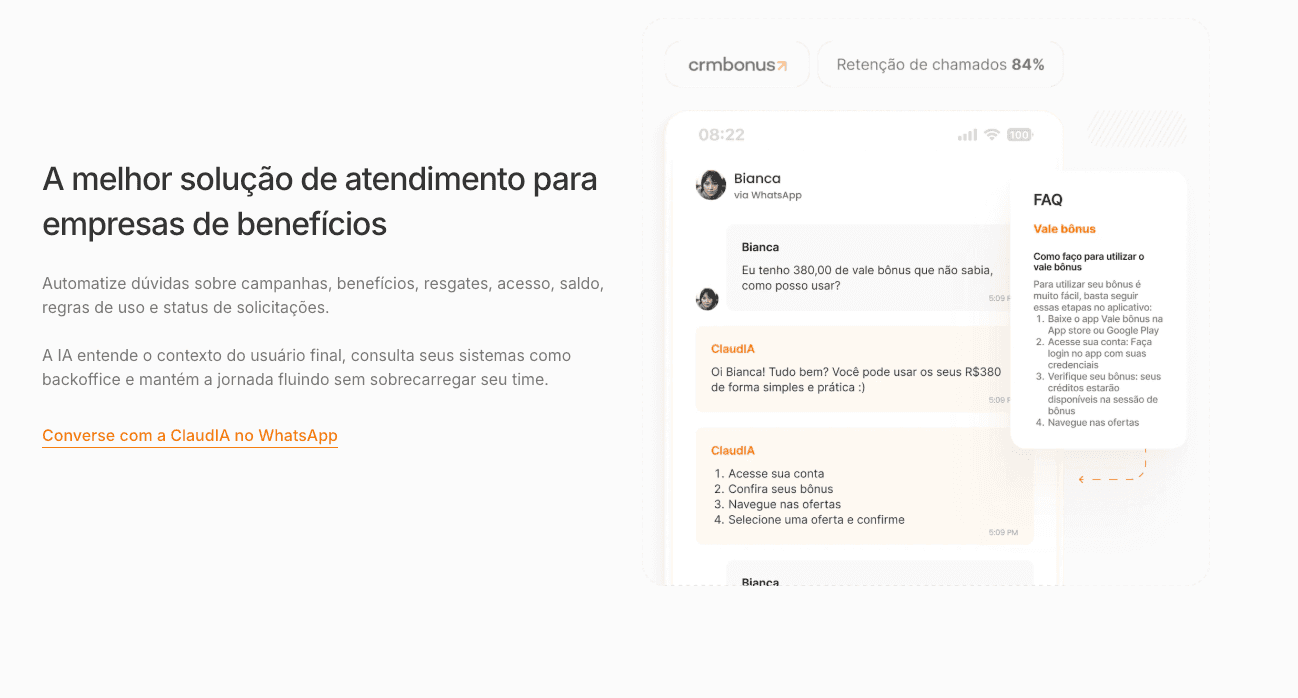
Case metrics
Retention (N1 automation)
Traditional bot: 30%
AI (evolution): 71% → 85%
Speed
Before: up to 24 hours for the first response
Now: 16 seconds
Quality
AI CSAT: 74%
Recent gain: +10 p.p. (focus on frustration and overflow)
Engagement in CSAT
Survey response rate: 17%
(bots are around ~5%, which is a good market comparison to include in the text)
How it was to implement (step by step practical)
Diagnosis → Content → Personality → Audit → Integrations → Optimization
1️⃣ Potential Diagnosis (free and no obligation)
Cloud Humans offers a free initial analysis based on real tickets.
Analysis of historical sample of service
Identification of main reasons for contact
Estimation of retention potential
Mapping of frictions and bottlenecks
Prioritization based on 80/20
📌 Objective: start small, with real impact.
2️⃣ Content curation (multi-source)
The AI was fed with different sources of knowledge:
Public FAQ
Internal articles
Business rules
Operational materials
Real service conversations
📌 No need for a perfect base.
📌 Needs to have content that resolves what happens most often.
3️⃣ Definition of persona and Val's tone of voice
The AI gained its own identity aligned with the brand.
Clear name and positioning as a virtual assistant
Humanized tone
Language aligned with company culture
Tests of variations of formality and empathy
📌 It is possible to test different configurations and measure impact on CSAT and retention.
4️⃣ Weekly audit (then ongoing)
CRM Bonus placed an owner of AI within CX.
Structured review of responses
Direct feedback on the platform
Quick adjustments without relying on IT
Progressive evolution of retention
📌 Cloud Humans has a simple UX for any team member to learn how to audit and train the AI.
5️⃣ Integration via API with CRM and internal systems
Here the AI became a real agent.
Status inquiry
Access to customer data
Integration with internal CRM
Responses based on real information
📌 The only requirement from the client was to ensure access to the systems.
📌 The entire journey construction was done together with Cloud Humans.
6️⃣ Fine adjustments via selected audits
Training AI is like training a new person on the team.
Correction of specific responses
Tone adjustment in sensitive cases
Configuration of frustration detector
Refinement of overflow rules
📌 This is how CRM Bonus gained +10 points in AI CSAT.
📌 Continuous evolution, not a magic leap.
Conclusion
What CRM Bônus did right was not to "put AI". It was to create a continuous improvement system: live content, auditing, integration, and intelligent overflow.
If you want to copy the playbook, copy this:
start small
measure retention and quality
provide context via API
and treat frustration as a priority
Then, yes, AI stops being a promise and becomes scale.